 DEUCE
DEUCETennis photography tips for phone players
To photograph tennis with a phone, shoot in bright light, stay still behind the baseline fence, use burst mode on serves and rallies, and tap to expose for the player rather than the sky. Look for moments between points too: toss, follow-through, shadows on the court and the ball on the line.
Coming soon to iPhone
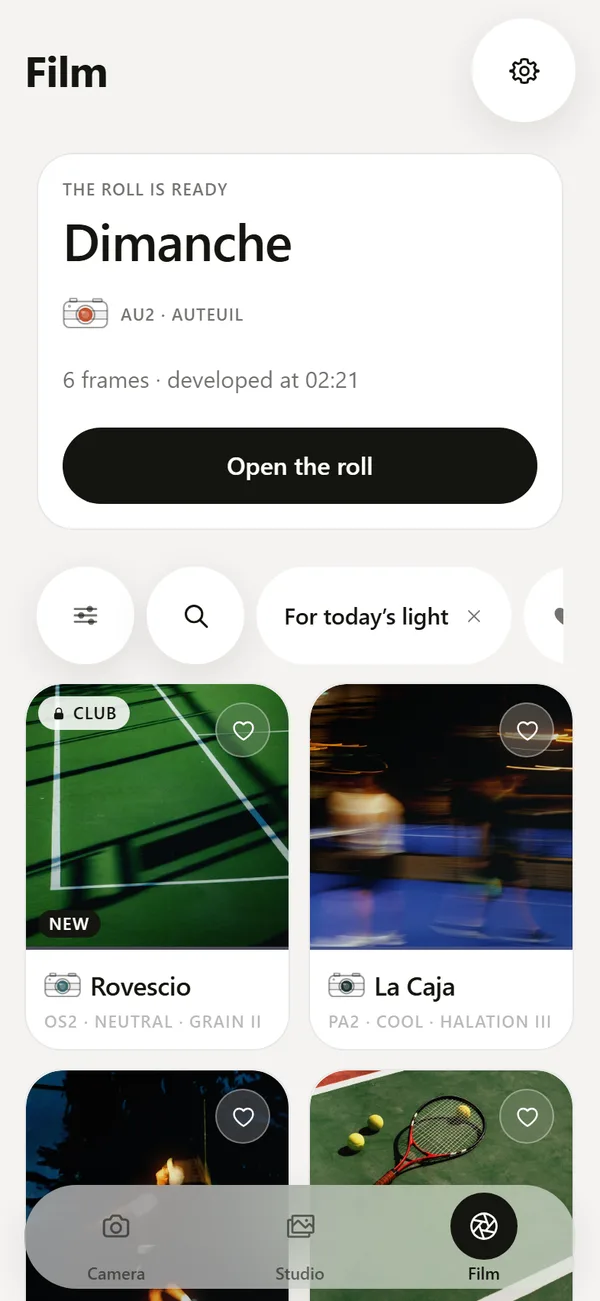
Where should you stand?
Stand behind the baseline fence or beside the court at the back, away from the players' path, and never move during a point. Sports photography depends on anticipating where the action goes (Sports photography on Wikipedia). In tennis, the action returns to the same places: the server's toss, the baseline, the net.
Ask the club before you shoot at a match, and never use flash. It distracts players and does nothing at that distance.
What settings freeze a serve?
Shutter speed controls motion blur, and a fast one stops a fast movement (Shutter speed on Wikipedia). A racket head at serve speed needs a much faster shutter than a walking player. Phones choose this automatically, so help them with light and with burst.
- Shoot in daylight so the phone can pick a fast shutter.
- Use burst mode and pick the best frame later.
- Tap on the player to set focus and exposure, then hold still.
- Keep the lens clean, because glare on a smeared lens ruins backlit shots.
- Use the telephoto lens when you stand far away, and the wide lens when you shoot from a few steps away.
Which moments make the best photos?
Points are fast, and some of the strongest photos happen between them. Plan a shot list so you do not chase everything.
- The toss and the stretch of a serve
- Follow-through on a forehand, with the racket past the shoulder
- A ball on the line, with dust
- Players at the net or at the handshake
- Net shadows across clay
- Details: racket strings, a towel on the chair, tape on a grip
How should you shoot each court surface?
Surface changes color, reflection and shadow. Clay is orange and warm, grass is green and soft, and hard courts are blue or green with sharper lines. Match your exposure and your film look to it.
| Surface and light | What to shoot | DEUCE film to try |
|---|---|---|
| Clay, midday | Dust, strong shadows, ochre tone | AU2 Dimanche |
| Clay, evening | Long shadows, warm grain | RQ2 Corniche |
| Grass, overcast | White clothing, soft green, honest whites | SW1 Church Road |
| Hard court, night | Lights, deep blue, halation | SW5 Night Centre 1600 |
| Any, black and white | Lines and shapes | FI3 Silver 100 |
What light is best?
Low sun gives warm color and long shadows, which suits clay and grass alike (Golden hour on Wikipedia)). Midday sun is harsh, with white clothing at risk of clipping. On overcast days the light is even, which helps with whites but flattens color.
Under floodlights, a phone raises its sensitivity and the picture gets noisy. Do not fight that. Grain and a film look can make the noise part of the style.
How do you compose a tennis photo?
Use the court. Lines, the net and the fence create frames within the frame. Leave space in the direction the player moves, so the picture has somewhere to go. Shoot from a low position to make the player look larger against the sky, and from the side to show the shape of a swing.
Vary your set: a few wide frames that show the court, a few medium frames of a player, and a few close details. When you share, the mix of wide, medium and close gives a post rhythm.
What about etiquette and safety?
Stay out of the line of play and keep behind barriers. Do not use flash, and do not move while a point is in progress. Ask players before you post photos of them, especially at a club. For minors, ask a parent or the coach.
How do you edit a whole match consistently?
Pick one film for the whole set, then adjust only exposure frame by frame. Copy the edit from your best frame and apply it to the others. In DEUCE, you can copy edits in the Studio tab and apply them to a selection. Finish with a scoreboard stencil for the final slide and a carousel for the post.
How do you shoot tennis at night?
Floodlit courts are dim compared with daylight, so a phone slows its shutter and raises sensitivity. Freeze less and accept some motion blur. A little blur on a racket can look good. Shoot players when they are still: the toss, the ready position, the wait before a serve.
Night is also where a film look pays off. Grain hides noise, and halation turns the lamps into glowing points.
What about padel and golf?
The same habits carry over. On a padel court, glass walls reflect, so move a step and check for glare before the rally starts. On a golf course, shoot at dawn or dusk when the light is low and the grass has long shadows.
Which phone habits help most?
Clean the lens with a soft cloth before you start. Turn on the grid to keep the horizon and the court lines level. Press and hold on the player to lock focus and exposure on an iPhone, then reframe. Keep the phone steady with both hands and your elbows against your body.
Do not zoom digitally if you can move instead. Digital zoom crops the picture and reduces detail, and a few steps usually cost nothing.
What does a match shot list look like?
A list keeps you from shooting the same thing all afternoon.
| Moment | Frames | Tip |
|---|---|---|
| Arrival and warm-up | 3 to 5 | Bags, rackets, the empty court |
| Serves | Burst of 10 | Start the burst at the toss |
| Rallies | Burst of 10 | Follow the ball to the baseline |
| Between points | 3 to 5 | Towel, water, a look at the score |
| Finish | 3 to 5 | Handshake and the walk off |
How can you give the photos a film look?
Choose a film that fits the surface and set its intensity, then crop. In DEUCE you can add a scoreboard stencil with names and a score, or build a carousel from the best frames. See the film catalog and stencils and carousels. If you want the surprise of seeing the results later, load a roll and let it develop at sunrise with the sunrise roll.
A short checklist
Clean the lens. Pick your spot before the match. Use burst on serves. Expose for the player. Shoot the details between points. Edit all frames from one match with the same film so they belong together.
Frequently asked questions
What is the best way to photograph tennis with an iPhone?
Use daylight, burst mode, and tap on the player to set focus and exposure. Stay behind the fence and keep still.
Which lens should I use?
Use a longer lens when you stand far from the court and a wide one from close up. Moving your feet matters more than zooming digitally.
Is flash allowed at tennis matches?
Usually not. Flash distracts players. Ask the club or tournament, and use available light.
How do I make tennis photos look like film?
Pick a film look that suits the surface, lower the intensity to taste and add fine grain. DEUCE has films matched to clay, grass and night courts.
What is a good first film for clay courts?
Dimanche is dense ochre with gold in the highlights and was made for midday clay.
Keep exploring
46 Film Looks for iPhone Photos46 films with codes, series and a comparison divider.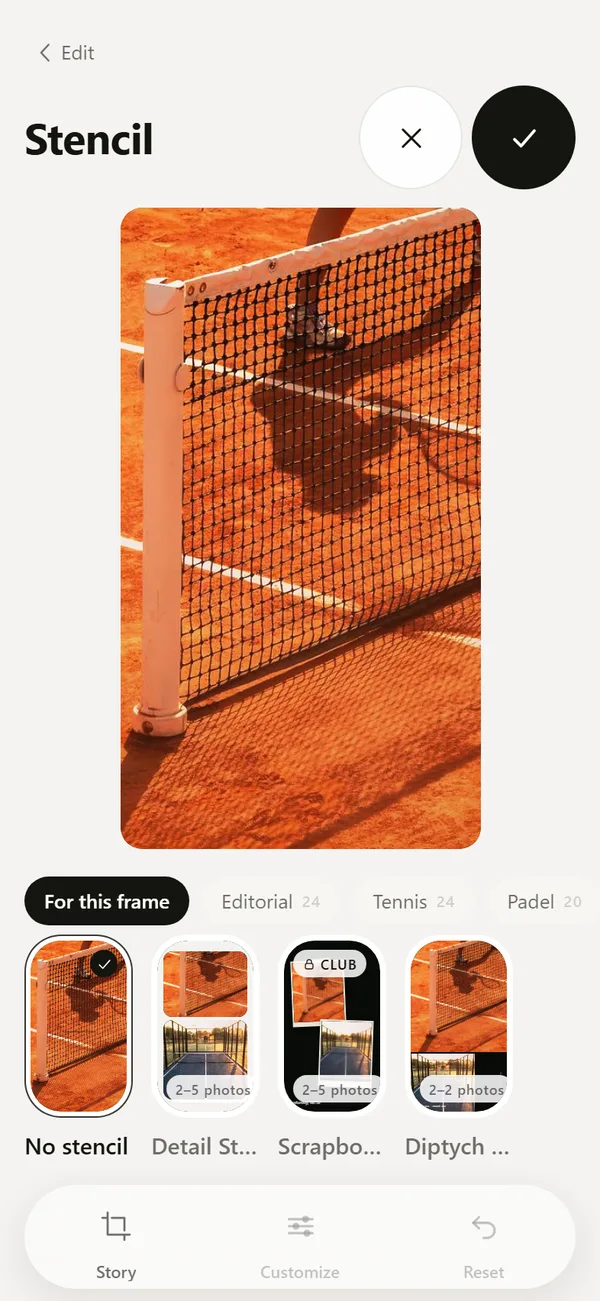 Tennis, Padel and Golf Photo Templates and CarouselsScoreboards, hole cards, club layouts and multi-frame carousels.
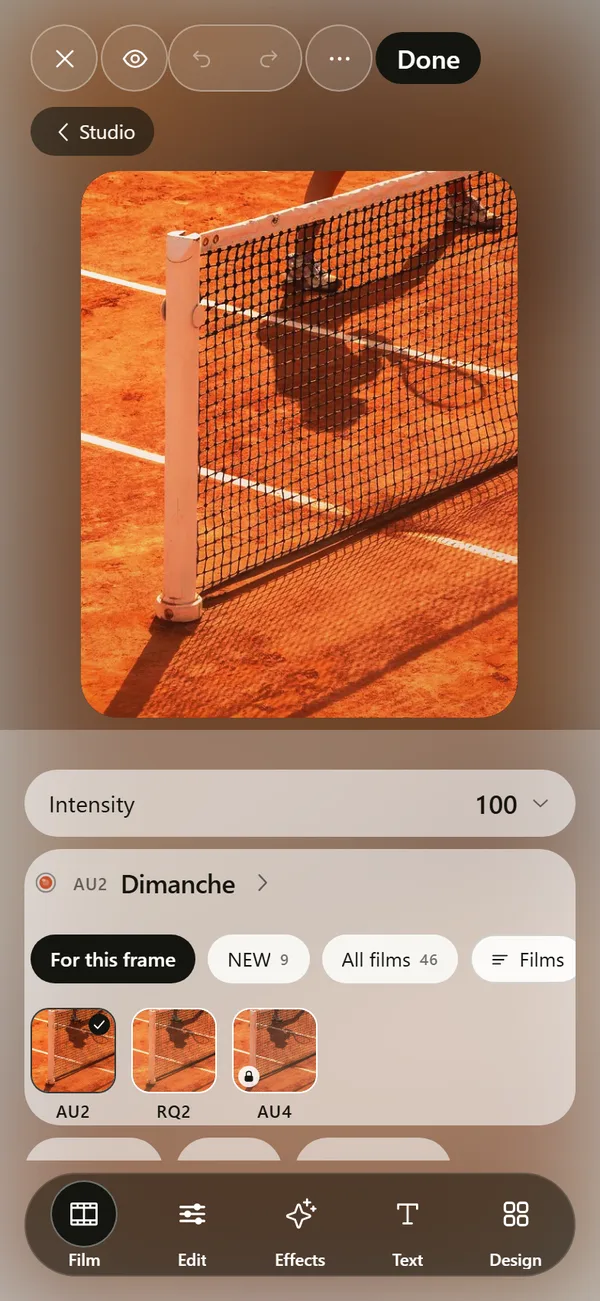 How to Make Photos Look Like Film on iPhoneFour changes that give a photo a film look: tone, color, grain and glow.
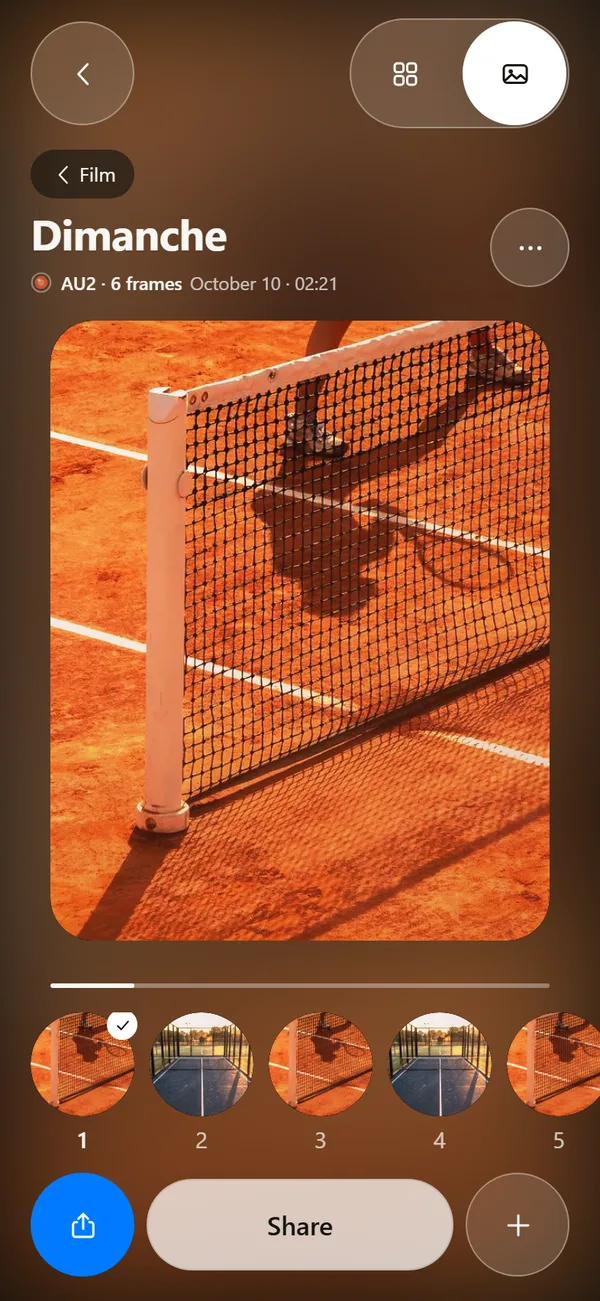 Film Roll That Develops at SunriseShoot blind and wait for sunrise. 12, 24 or 36 frames per roll.