 DEUCE
DEUCEiPhone focal length explained: what 24, 35, 55 and 85 mm look like
Focal length sets how wide or tight a photo looks. On iPhone the main camera is roughly a 24 to 26 mm equivalent, wide enough for scenes. 35 mm suits everyday street frames, 55 mm gives natural portraits and 85 mm compresses a background for tighter, flattering faces.
Coming soon to iPhone
What does focal length mean on a phone?
Focal length is the distance between the lens and the sensor when the subject is in focus, measured in millimeters. A short focal length sees a wide scene, and a long one sees a narrow slice and magnifies it. Phone sensors are much smaller than the 35 mm film frame, so phone makers quote a 35 mm equivalent, which tells you what a full-frame camera would need to match the same view (35 mm equivalent focal length on Wikipedia).
The real focal length of an iPhone lens is only a few millimeters. That number is useless for comparing. The equivalent is the one that tells you how the picture will look.
What focal length is the iPhone main camera?
Recent iPhone models use a main camera in the 24 to 26 mm equivalent range, and an ultra wide below that. Some Pro models add a telephoto, and some offer crop modes that simulate other lengths from the main sensor. The numbers differ by model, so check the lens line in Photos when you swipe up on a picture, which lists the lens used for that shot.
How do 24, 35, 55 and 85 mm compare?
DEUCE offers exactly these four lenses in its camera, so you can test each one on the same scene.
| Lens | View | Typical use | Watch for |
|---|---|---|---|
| 24 mm | Wide, includes the surroundings | Courts, fairways, scenes, group shots | Edges stretch on faces |
| 35 mm | Natural, a bit wider than the eye | Street, details, candid moments | Needs closeness for portraits |
| 55 mm | Slightly tight, close to the eye | Portraits, mid-court action | Need more distance |
| 85 mm | Tight, background compressed | Faces, far action, details | Shake shows more |
Which lens suits tennis, padel and golf?
For tennis from the stands, a long lens such as 55 or 85 mm brings the baseline closer, but you need steady hands. From beside the court, 35 mm gives a natural view of a player. For padel, the court is small, so 24 or 35 mm captures the walls, the glass and both players. For golf, 24 mm shows the whole hole, 55 mm suits a swing from a few meters away, and 85 mm picks out a flag at the end of a fairway.
The tennis guide in tennis photography tips for phone players adds where to stand and when to shoot.
Why does focal length change how a face looks?
Short lenses used up close exaggerate the nose and forehead, because the distance between camera and face is small. Longer lenses used from farther away flatten features, which most people find more flattering. This is a distance effect, but the lens choice forces the distance: at 85 mm you step back, and at 24 mm you step in.
How do you pick the lens before you shoot?
- Ask what the picture is about: a place, a person or a detail.
- Choose the lens by how much of the surroundings should be visible.
- Move your feet until the framing works, then adjust the lens if needed.
- Check the edges for anything distracting.
- Take one frame on a second lens for comparison.
How does DEUCE show lens choice?
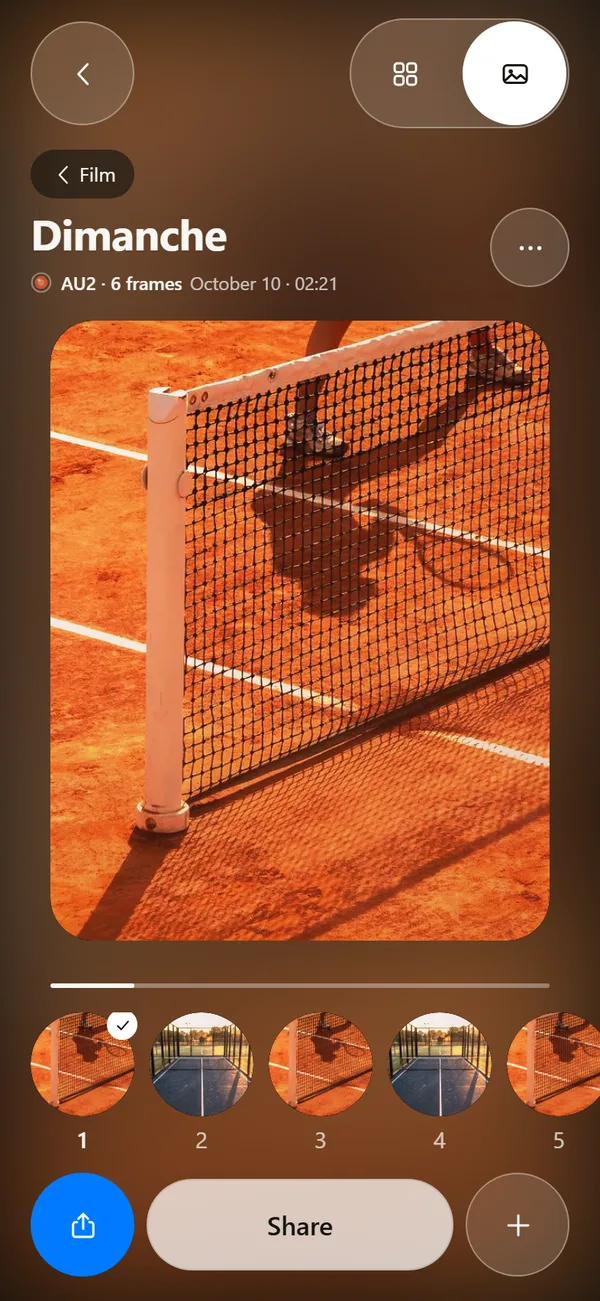
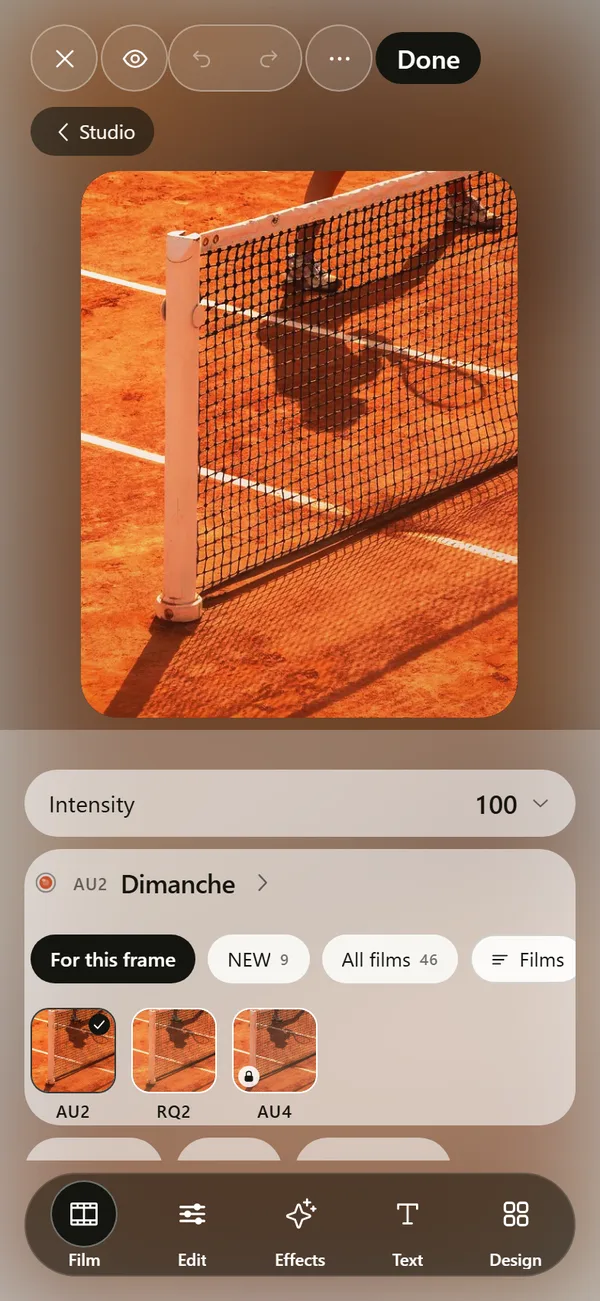
In DEUCE the camera shows the film before the shutter, so you can judge the look while framing. It has four lenses, 24, 35, 55 and 85 mm. Grid options are thirds, golden, center and safe, and manual controls cover exposure, ISO, shutter, white balance and focus. The lens used is saved with each frame, and the info panel shows film, size, kind, date added and lens. Settings remember the last lens and flash.
Read more in sunrise roll, which describes the camera, or the photo editor guide for the lens line in the info panel.
Is a digital zoom the same as a longer lens?
No. A true telephoto lens has its own optics. Digital zoom or a crop mode uses a slice of the main sensor, so the picture has fewer pixels. The result can be good at moderate crops and soft at heavy ones. If you can move closer, do it. If you cannot, crop in editing and keep the original resolution until the final step.
Common mistakes with focal length
- Using the widest lens for portraits and then wondering why faces look odd.
- Zooming to the maximum instead of walking closer.
- Changing lens in the middle of a rally and missing the shot.
- Forgetting that longer lenses show hand shake more.
- Cropping tight in editing and expecting full detail.
How do you test your own lens preferences?
- Choose a scene that stays the same, such as a bench or a fence.
- Shoot it at 24, 35, 55 and 85 mm, moving to keep the subject the same size.
- Compare how the background changes.
- Note which version you prefer for a portrait and which for a place.
- Repeat on a court or a green, and keep a note of your favorites.
How does focal length change the background?
Longer lenses compress distance, so objects behind the subject look larger and closer. A tennis stand behind a player seems to loom over them at 85 mm. At 24 mm, the stand shrinks and the court feels bigger. Choose the lens that makes the background do what the story needs: a crowded feel for a tournament, empty space for a quiet practice.
Does focal length affect depth of field?
Phone sensors are small, so most phone photos are sharp from front to back. Longer lenses and close subjects give a softer background, and some phones add a portrait mode that blurs it in software. Film looks do not change focus, but halation and bloom can soften bright areas, which adds a similar feel. Read the halation guide to see how.
Which lens should a beginner use most?
Start with the main lens, around 24 mm equivalent, and move your feet. Add 55 or 85 mm when you want a tighter view and have room to step back. Use 35 mm for candid shots where you want a natural look. Change only one thing at a time, so you can see what each choice does. After a month, you will know which lens you reach for without thinking.
Frequently asked questions
What focal length is the iPhone camera?
The main camera is around a 24 to 26 mm equivalent on recent models. The exact value depends on the model.
What is the best focal length for portraits on iPhone?
Around 55 to 85 mm equivalent gives natural proportions, if you have the room to step back.
Which lenses does DEUCE offer?
Four: 24, 35, 55 and 85 mm.
Is 35 mm better than 24 mm?
It depends. 24 mm shows more of the scene, while 35 mm looks more natural and is easier for candid frames.
Does digital zoom lower image quality?
It can, because it crops the sensor. Moving closer gives better results.
Keep exploring
 Film Roll That Develops at SunriseShoot blind and wait for sunrise. 12, 24 or 36 frames per roll.
 Film Photo Editor for iPhoneFilm, light, effects, text and design tools. Originals stay untouched.Sports Photography on iPhoneA checklist for action photos on iPhone: light, focus lock, burst, lens and editing.