 DEUCE
DEUCEThe disposable camera look on iPhone
A disposable camera gives you a fixed number of exposures, no preview screen and a wait until the film is developed. On iPhone you can recreate the experience by shooting a limited roll without viewing it, then adding direct flash, grain, a date stamp and a slight vignette in an editor.
Coming soon to iPhone
What is a disposable camera?
A disposable camera, also called a single-use camera, is a simple film camera sold with film already loaded. You shoot the whole roll, and a lab develops it (Single-use camera on Wikipedia). They typically have a fixed lens, a small built-in flash and a few dozen exposures.
You cannot see the photo you just took. You see all of them later.
Why do people like the disposable camera look?
Two things combine. The look is blunt: direct flash, slightly flat color, grain and a fixed lens that is rarely sharp at the edges. And the process is slow. Exposed film holds an invisible latent image until it is developed (Latent image on Wikipedia), so you cannot check or retake. That makes you commit to each frame.
Phone cameras reverse both. They show a perfect preview instantly and let you take a hundred copies of the same shot.
How do you recreate the experience on iPhone?
Recreate the process first, then the look. The process changes how you shoot more than any filter does.
- Set a limit. Decide on a number of frames before you start, such as 12, 24 or 36.
- Hide the results. Do not review the photos until the end.
- Wait. Give it a day, or until morning.
- Open the roll and pick favorites.
- Apply a look that matches the era you want.
Which settings give the look?
The recognizable parts are a hard flash, a warm color cast, visible grain and a date stamp. This table shows how to approximate them in an editor.
| Trait | What to do |
|---|---|
| Direct flash | Brighten the center, darken the edges, keep skin warm |
| Color cast | Warm temperature, slightly green shadows |
| Grain | Medium amount, medium size |
| Date stamp | Add a small orange timestamp in a corner |
| Soft edges | Light lens softness and a mild vignette |
How does DEUCE do a blind roll?
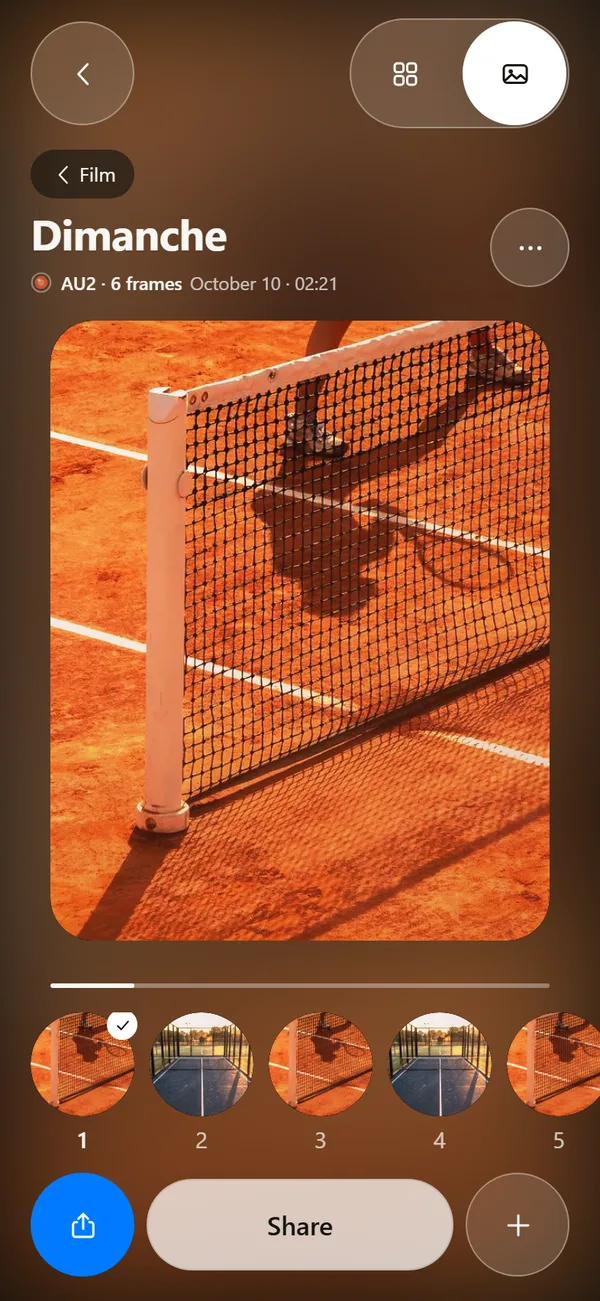
DEUCE has a rolls mode built around that idea. You pick a film and a length of 12, 24 or 36 frames. After each shot the counter moves on, for example Frame 7 of 24, and the picture is not shown. A frame cannot be viewed or deleted until the roll develops, and it develops at your local sunrise.
The first roll is free. For the editing side, DEUCE has Direct Flash, Timestamp and Lens Softness effects, and light leaks and dust if you want more wear. See the sunrise roll and the photo editor.
A sample 24-frame plan
Here is how you might spend a 24-frame roll on a Sunday match day.
| Frames | What to shoot |
|---|---|
| 1 to 3 | Arrival, the car, the bag |
| 4 to 8 | Warm-up and the empty court |
| 9 to 16 | Play: serves, rallies, the net |
| 17 to 20 | Details: balls, lines, shoes |
| 21 to 24 | People, handshake, the walk off |
How does a real disposable camera compare with a phone roll?
The table sums up the differences.
| Real camera | Phone roll | |
|---|---|---|
| Preview | None | None until the roll develops |
| Shots | Fixed by the camera | 12, 24 or 36 in DEUCE |
| Wait | Days, until a lab develops it | Until your local sunrise |
| Result | Prints or scans | Digital files in your phone |
| Cost | Camera and development | First roll free in DEUCE |
Why does the wait change how you shoot?
When you know you cannot check a frame, you stop chasing the perfect one. You trust the moment. People who shoot blind rolls often report that they pay more attention to what is in front of them, because the screen is not competing for it.
The wait also adds anticipation. Opening a roll the morning after, with all frames arriving at once, feels closer to collecting prints than to scrolling a camera roll. DEUCE ties that moment to sunrise, so the roll is ready when you wake up.
Which films suit a disposable look?
Pick a film with warm color, visible grain and moderate contrast. In DEUCE, many of the films have notes that tell you the direction, such as dense ochre, warm evening or honest whites. For a quick test, load one roll with one film, because mixing films within a roll breaks the story. You can still change the look of any frame later in the editor.
Is it better to use a real disposable camera?
A real one gives you a real print, real chemistry and a trip to a lab. A phone gives you convenience and a sharper starting image. Many people use both: a real camera for special occasions and a phone roll for everyday ones.
What are real single-use cameras like to shoot?
Expect a plastic body, a fixed focus lens and a small flash you charge by pressing a button. The picture is usually sharp enough at a few steps from the subject and soft far away. Frames are advanced with a thumb wheel, and a counter shows how many are left.
These limits shaped the look. Hard flash in the dark, flat midday color, and soft corners are all consequences of cheap, simple parts.
How do you plan a roll?
Treat the roll as a story with a start and an end. For a match day, plan frames for arrival, warm-up, key points, details and the handshake. Twelve frames force you to be selective. Thirty-six frames let you wander. Decide the length from the length of the event.
What rules make a blind roll more fun?
Set a rule you cannot cheat on. No checking until the sun comes up. One shot per scene. Two frames of friends for every frame of scenery. Each rule changes how you look at a scene.
What do you do when the roll is ready?
Open the sheet and look at everything in one pass, without deleting anything. Mark favorites. Then choose a film or a look and edit only the best few, so the roll stays consistent. In DEUCE, a developed roll opens as a sheet of all frames, and each frame can be marked as a favorite, edited or shared.
Tips for better blind rolls
Shoot fewer, better frames. Use flash only when it helps. Look for contrast and clear subjects, because flat scenes look flat on any film. Keep the roll for one event, such as a match day or a trip, so it reads as a story.
Frequently asked questions
Can an iPhone app really act like a disposable camera?
It can imitate the process, with a fixed number of frames and no preview, and the look, with flash and grain. It cannot replace real film chemistry.
How many shots should a phone roll have?
Anything from 12 to 36 works. DEUCE offers 12, 24 and 36 frames.
When do my photos appear in DEUCE?
At your next local sunrise after the roll is complete. Club members can develop a roll immediately.
Does DEUCE have a date stamp?
Yes. Timestamp is one of the effects in the editor.
Is the first roll free?
Yes. The first roll and its developing are free in DEUCE. Later rolls need DEUCE Club.
Keep exploring
Film Roll That Develops at SunriseShoot blind and wait for sunrise. 12, 24 or 36 frames per roll.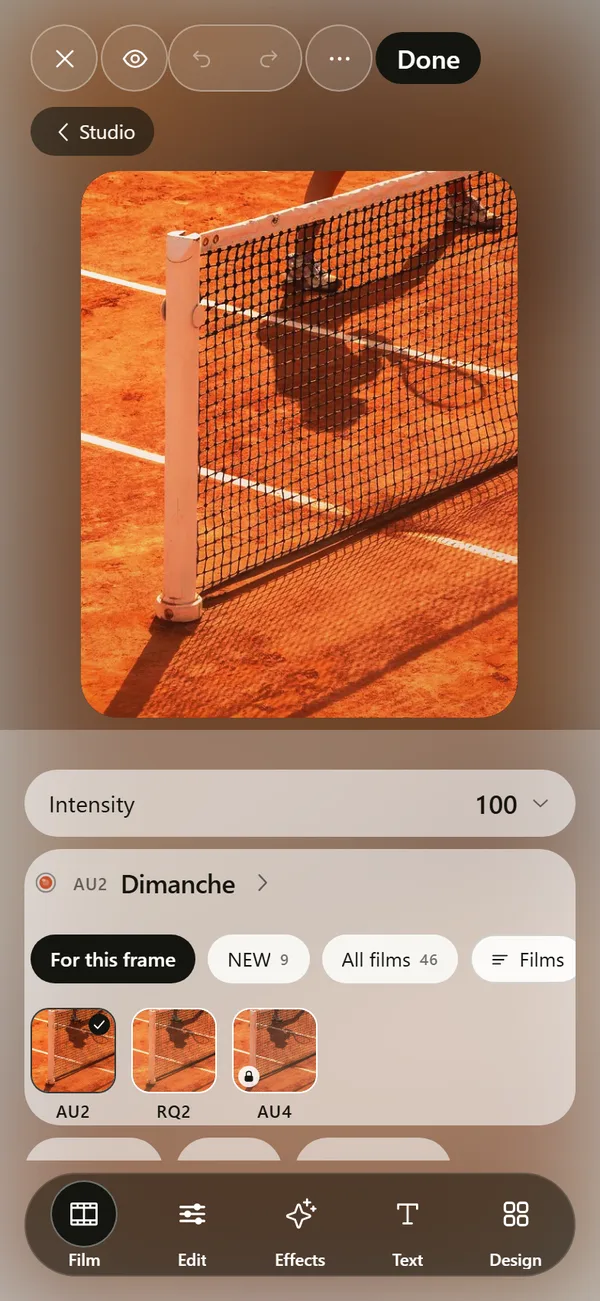 Film Photo Editor for iPhoneFilm, light, effects, text and design tools. Originals stay untouched.How to Make Photos Look Like Film on iPhoneFour changes that give a photo a film look: tone, color, grain and glow.
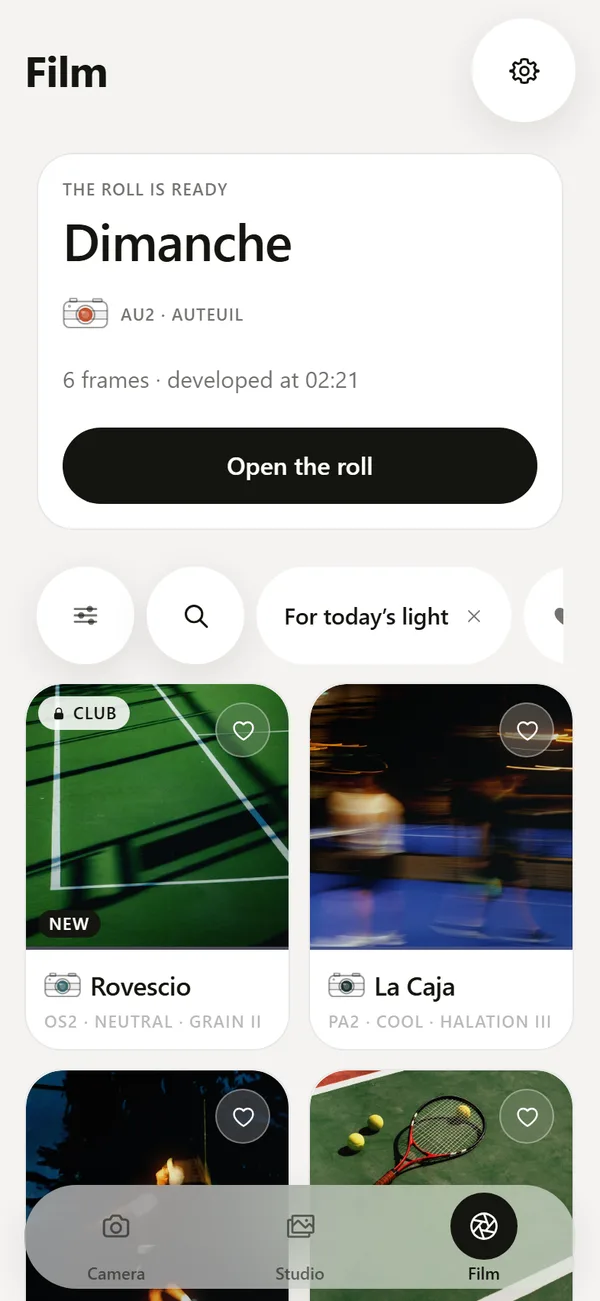 46 Film Looks for iPhone Photos46 films with codes, series and a comparison divider.